This story is a repost of an article first published by TradeWinds.
Written by Eric Priante Martin, January 29, 2026.
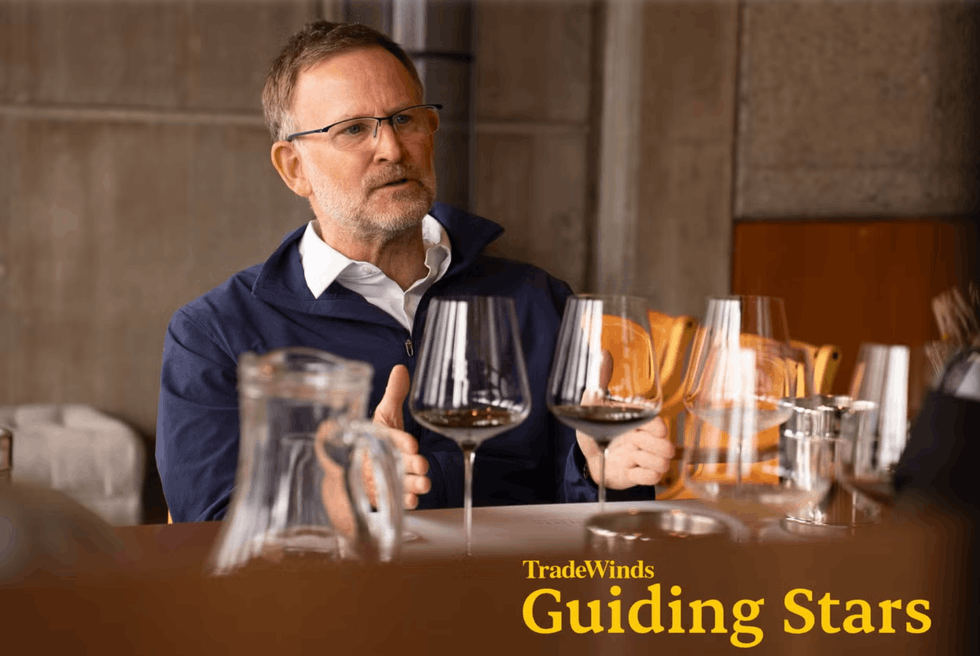
Odfjell chair Laurence Odfjell has pushed the Norwegian tanker owner to decarbonize. Photo: SelekFilms
When Odfjell SE sent a chemical tanker across the Atlantic on a pioneering voyage with nearly net-zero carbon emissions, it was not about putting 100% sustainable biofuels in the ship’s tanks.
The 49,100-dwt Bow Olympus (built 2019) also featured four suction sails and benefited from the economies of scale of being one of the world’s largest stainless-steel chemical tankers.
Factor in the cost of European emissions regulations, and chair Laurence Odfjell described the cost of biofuels as within “shooting distance” of cheaper fossil fuels.
“We proved that this is a pathway that, with the right carbon pricing — and it’s not too aggressive carbon pricing — is an alternative,” he told TradeWinds.
Odfjell, who TradeWinds readers have nominated as one of the “Guiding Stars” in shipping for his tanker company’s sustainability efforts, sees emissions reductions and energy efficiency as a matter of good business.
He explained with pride that Odfjell SE began investing in energy-efficient technology during tough times in the chemical tanker market, and it is paying off.
“We see it as a competitive edge,” he said
Savings that matter
Odfjell believes that the return on investment from installing energy-saving devices is undercommunicated.
The tanker company, where he is the fourth generation of the Odfjell family in leadership, has invested approximately $40m in energy-saving devices over the past 10 years, he estimates.
While that represents a fraction of its annual revenue of more than $1bn, the investment has returned $27m per year, representing a two-year payback.
“What we’ve done, we’ve done with available technology. It has not cost us a lot of money, and we’re making money doing so,” he said.
From wind propulsion to biofuels, green corridors to driving energy efficiency, tanker operator Odfjell SE is leaving few stones unturned in its pursuit of a greener business.
But its chair said it focused on what it can change now, rather than the pursuit of green fuels that are not yet available at scale.
All talk, no action
Shipowners are wasting time, he told TradeWinds, with a focus on future fuels.
“The industry, all these consultants, all this work — they are giving an excuse for complacency and waste by talking about methanol this, ammonia that,” he said.
“They’re not doing enough today.”
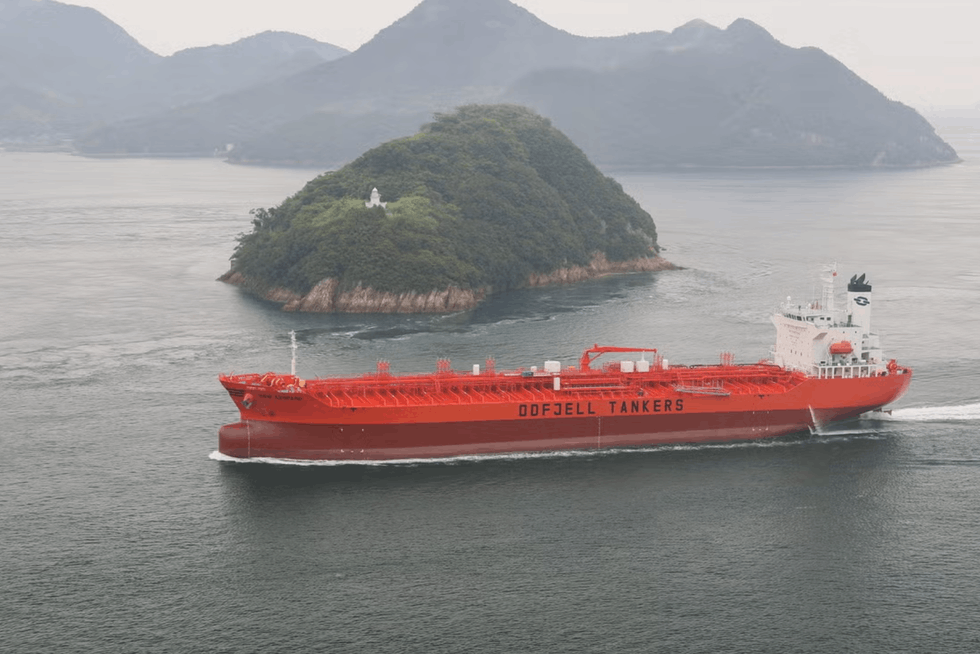
The chemical tanker Bow Leopard is one of the vessels operating on Odfjell’s green corridor to Brazil. (Photo: Odfjell)
And he said CO2 accumulates in the atmosphere.
“So for every year we delay improvements, it really matters, because the next year adds on,” the chairman said.
Oslo-listed Odfjell SE’s focus on sustainability is part of its DNA, he said, citing the outfit’s long-held commitment to operational excellence and innovation.
Standing on the balcony of the family’s winery in Central Chile’s Padre Hurtado—which uses biodynamic agriculture to make organic wines—Odfjell added that sustainability is part of being a Norwegian company.
“We respect nature,” he said.
“I don’t have to tell our engineers, ‘Hey, let’s be more efficient. Let’s emit less’ They are burning for it. There’s a passion to become a world leader in terms of sustainability and decarbonisation.”
And the company is proving what is possible by forging new paths.
Odfjell SE used what it learned from the Bow Olympus biofuels voyage to create what the chair described as the first operational green corridor, using biofuels procured from Brazil’s Petrobras.
Odfjell said the board voted to foot the bill, without waiting for customer or regulatory support.
Business case
He acknowledged that it was not clear when the company would receive a payback, but he still sees a business case.
“We hope this will lead to customers giving us preference so we have better utilisation of our ships,” Odfjell said.
But Odfjell SE is a big player in a small, niche market.
It owns fewer than 50 ships, operating less than 80 when time-charter tonnage is factored.
And the chemical segment is just a small fraction of the global tanker sector.
Odfjell, who succeeded his father, Dan, as chair in 2010, said the company is small in the grand scheme of things.
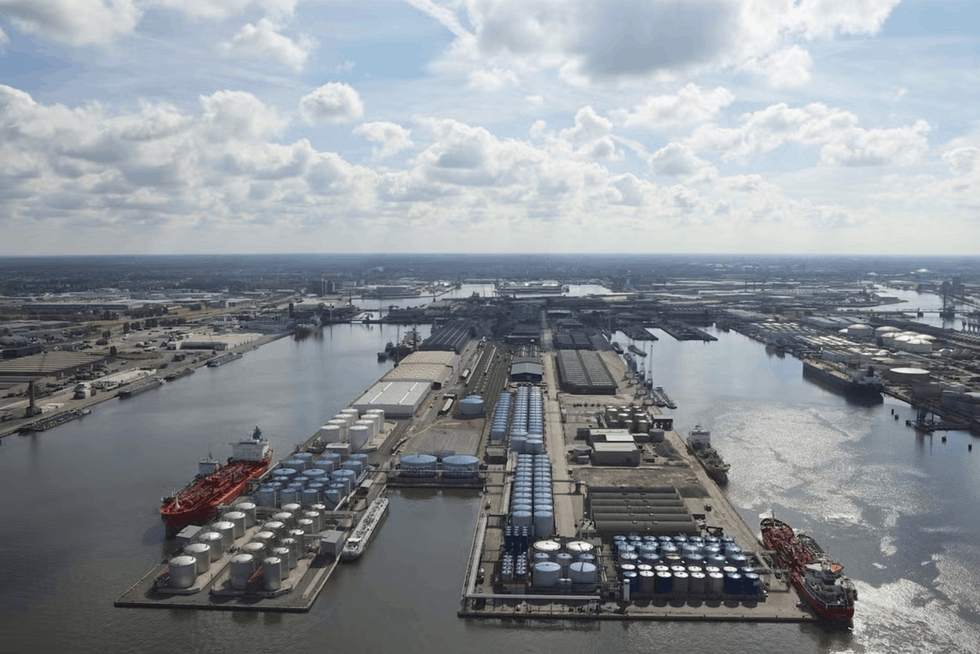
NNOAT is one of the facilities in Odfjell’s terminal network. (Photo: Odfjell)
Still, he believes Odfjell SE is making a difference by doing work that can be repeated by others in the industry.
“It’s very practical. It’s very sensible. We’re not throwing money at stuff. We’re investing and getting our money back,” he said.
And he said that when Odfjell SE tests technology, like bound4blue’s suction sails, it orders more of it and makes a lot of noise, in the hopes that others in shipping will follow its lead.
Why make noise
Making noise is a contrast to the shipping industry Odfjell came to know more than 20 years ago, when the Yale-educated architect finally decided to join the family business.
Back then, keeping quiet was seen as a competitive advantage.
“We have used our platform, for all its worth, to communicate that, ‘Hey, what we’re doing makes good sense for the environment, makes good sense for our customers and it makes good sense for our bottom line’,” he said.“I hope that we thereby have been able to move more people to do more.”
Odfjell also cited the company’s influential role in the regulatory debate over greenhouse gas emissions and its 2023 paper on the challenges of e-fuels that are made from renewable electricity.
The paper was presented to the International Maritime Organization by Intertanko and had an impact on the debate at the United Nations shipping regulator.
IMO setback
The tanker operator views the IMO’s delay of the Net-Zero Framework as a major setback.
“Regulations drive change. It’s always been that way. It will always be that way,” he said.
“And that regulation would have a much bigger impact on what we’ve been talking about today than anything that any single operator can do.”
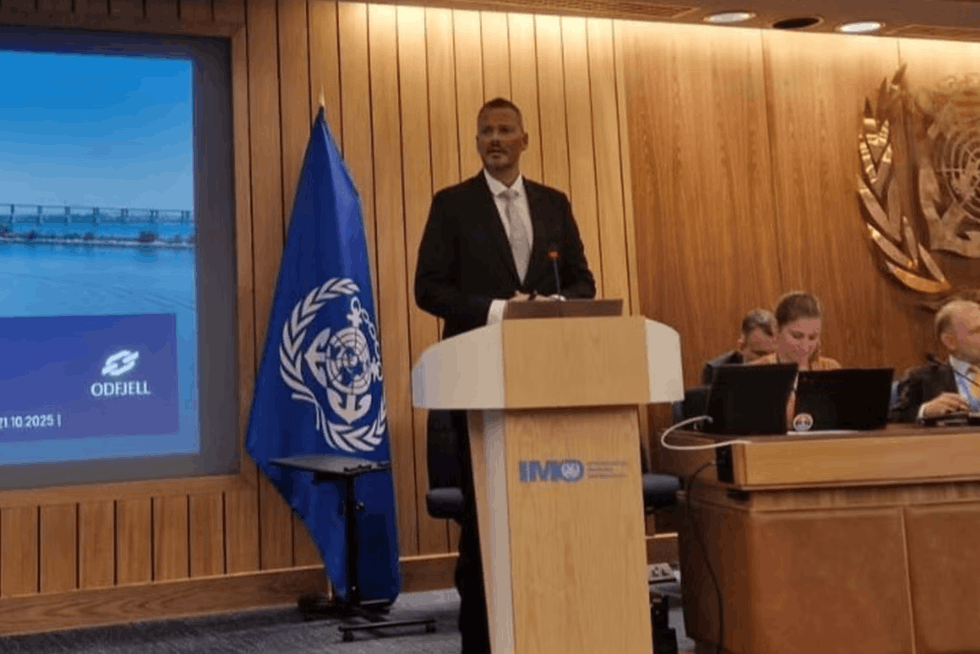
Odfjelll SE vice president of technology Erik Hjortland presents at the International Maritime Organization. (Photo: Odjfell)
Asked why he thinks other companies are not doing more to save fuel, the chair acknowledged that as an outfit that operates its own ships and terminals, it has more control over its fuel consumption than, for example, a tonnage provider chartering out vessels.
But he expresses frustration with the lack of uptake of energy-saving technology in the industry.
He pointed to data that showed that in 2024, 67% of the world fleet did not have a single energy-saving device.
Efficiency tech uptake
A report by Clarksons Research this month showed that the figure has improved, with more than 46% of tonnage fitted with such technology, which includes wind propulsion, air lubrication and fuel-efficient propeller ducts.
However, that means that there is still a majority of the world fleet, nearly 54%, that has no such equipment.
Odfjell said there is a huge potential for the industry to do more, and to do so by capitalising on the low-hanging fruit of fuel efficiency.
Given the payback on fuel savings, Odfjell is critical of investors who do not demand that public companies adopt energy-efficient technologies in their ships.
“They’re burning money unnecessarily … They could reduce the burn by making sensible investments,” he said of those shipowners and operators.
“Why aren’t shareholders saying, ‘Why aren’t you doing more? Why aren’t you reducing your fuel consumption? Why are we burning money?’”
About this series
This profile is one of several that TradeWinds journalists will write as part of TradeWinds’ Guiding Stars project, an industry-wide spotlight on people and ideas shaping a better future for shipping.
After seeking nominations for individuals who deserve recognition for leadership, innovation or inspiration on the tough problems facing shipping today, a small committee of editorial staffers narrowed down a list of finalists.
Each month, TradeWinds will profile one of the finalists, ahead of naming TradeWinds Guiding Star for 2026 in October. Read the original article in TradeWinds.