Operating high-barrier assets in key hubs in Europe, Asia, and the U.S., we combine long-term partnerships, safe operations, and local execution that sustain value through cycles.
Since 2018, Odfjell Terminals has moved from transformation to performance, delivering steady, sustainable growth that creates lasting value for customers and shareholders.
After a period of restructuring that brought Odfjell Terminals “home to Norway”, restored profitability, and consolidated the terminal platform around local leaders in strategic chemical hubs, we now work in close partnership with local management teams, focusing on operational value creation and disciplined growth.
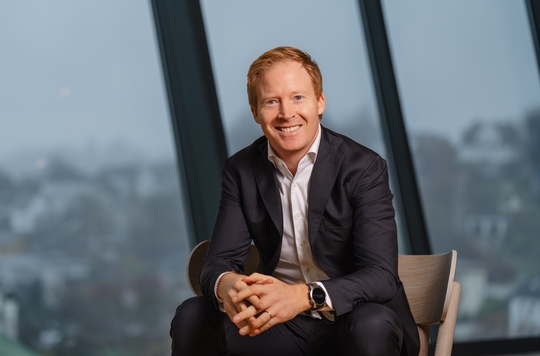
“We’ve been in the industry long enough to know the cycles and see through the noise. Operating safely and serving our customers reliably is our license to operate—while driving performance is what gets us up in the morning. We’re perpetual owners but chronically impatient when it comes to value creation. We don’t chase size; we pursue projects that methodically add value for our customers and our shareholders.”
Adrian Lenning, Managing Director
Today, Odfjell Terminals stands as a cohesive, performance-driven platform. The restructuring phase focused on streamlining the portfolio, aligning governance, and strengthening local leadership across terminal locations.
In recent years, the terminals have demonstrated resilient performance and steady progress across the portfolio. Building on that momentum, we have continued to pursue disciplined expansion and operational improvement—a “playbook” that has translated into consistently improving results and growth across the network.
EBITDA from the terminal portfolio has grown by nearly 85 percent since 2018, about 180,000 cbm capacity has been added, and safety metrics have improved year after year.
The four-terminal network—Houston, Charleston, Ulsan, and Antwerp—now totals roughly 1.3 million cbm, with 100,000 cbm of new capacity under development across ongoing projects such as E5 in Korea and Tankpit Q in Antwerp.
“Since 2018, our focus has been on clarity and execution,” says Lenning. “We’ve built a model where local management leads from the front, supported by an active, industrial owner that sets and drives strategy. It’s a simple, disciplined structure that works—because decisions are made close to the assets, and everyone is accountable for performance.”
Creating value
Odfjell Terminals’ progress rests on four connected levers that translate strategy into day-to-day performance:
- Accretive Expansions—Modular, phased projects within existing footprints that build on proven demand. Since 2018, seven new pits in Antwerp and Houston have added about 180,000 cbm and around USD 200 million in investment.
- Operational Improvements—Multi-year improvement plans in Korea and the US aimed at strengthening efficiency, safety, and cost discipline.
- Digitalization & Automation—Digitalization of core work processes provides deeper operational insight and oversight, improving safety and efficiency across terminals.
- Governance & Empowerment—Clear frameworks and a long-term strategic view align headquarters and local teams around each terminal’s investment and improvement roadmap, ensuring disciplined execution and sustainable value creation.
Together, these levers form the foundation of Odfjell’s operating model—one that now drives measurable results across every terminal in the network.
United States—Digital discipline
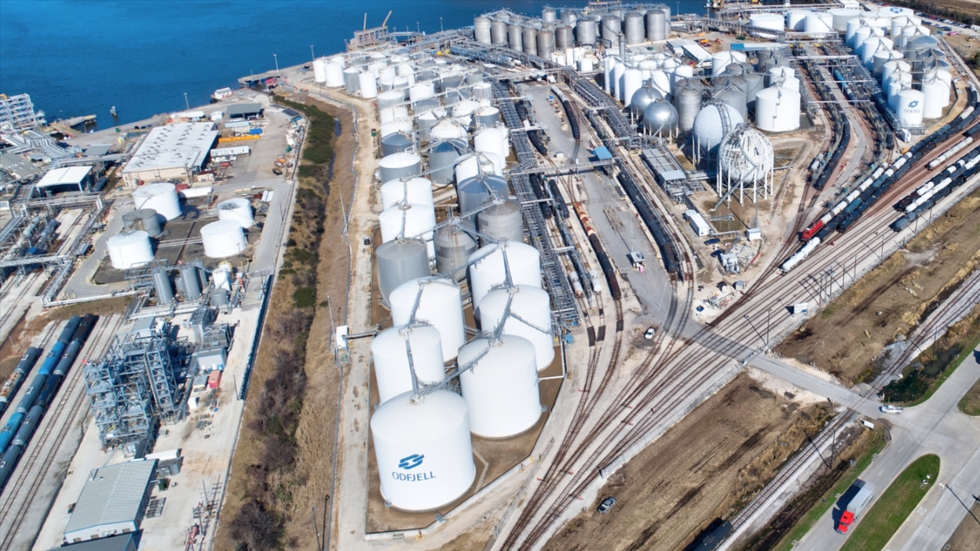
At the heart of the Gulf Coast chemical corridor, the Houston terminal offers high-quality services, deep-draft access, extensive pipeline and rail connections, and room for modular growth.
The U.S. remains a cornerstone of our terminal portfolio—a long-term commitment that reflects both strategic importance and confidence in this market. We continue to invest in and develop our U.S. operations, strengthening a platform that has been—and will remain—central to growth.
That commitment is backed by a multi-year improvement effort, which has tightened cost discipline while improving operational safety and productivity, and brought commercial and operations teams closer together.
Alongside this, a large-scale digital transformation is reshaping the daily work of operators—replacing paper-based routines with digital tools and handheld devices that bring real-time data to the front line.
The payoff: stronger margins and a reputation for reliability that keeps Odfjell’s U.S. sites among the region’s busiest.
Antwerp—Expansion with precision
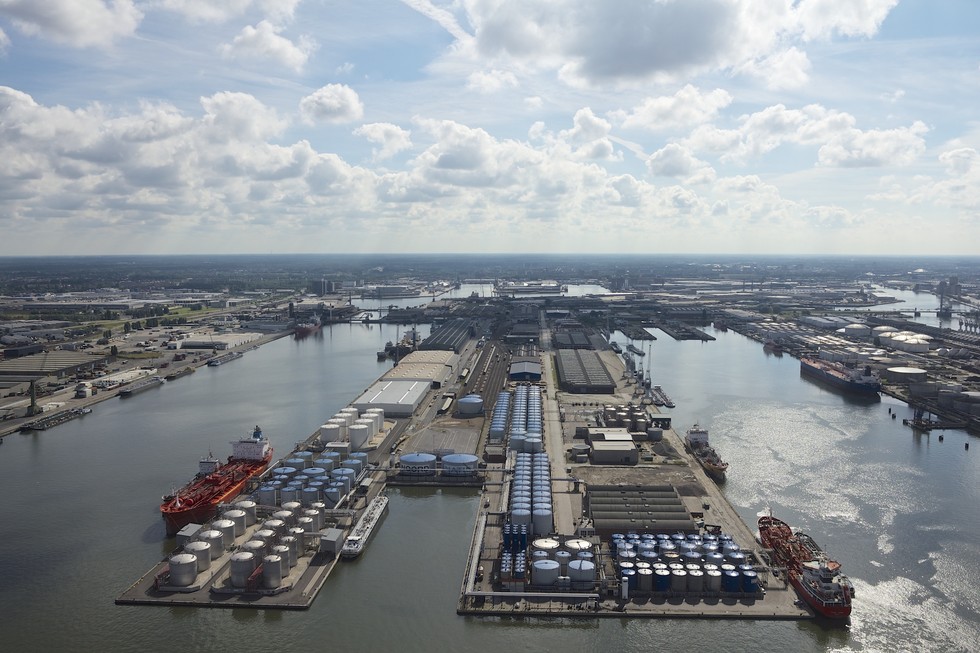
In Antwerp, expansion has followed a clear, deliberate rhythm—seven new pits since 2018, adding more than 160,000 cbm while maintaining near full utilization. Each phase was delivered safely, on time, and on budget, reflecting a local team with deep expertise and enduring customer relationships.
Under a long-term roadmap, 2025 marked the completion of two additional expansion projects at Noord Natie Odfjell Antwerp Terminal (NNOAT): Tankpit R added 27,500 cbm across ten tanks, followed by Tankpit Q with 12,000 cbm of stainless-steel capacity.
Both projects form part of a broader program shaping NNOAT’s phased expansion and long-term improvement. With the expansions being fully automated, the terminal is able to do more with fewer resources—streamlining operations, reducing manual handling, and enhancing both efficiency and safety.
The focus on disciplined growth extended beyond tank construction: in 2025, NNOAT piloted drones for cargo sampling and earned ISCC sustainability certifications, advancing both safety and innovation. That steady progress was recognized when NNOAT became a finalist for Belgium’s 2025 EY Entrepreneur of the Year award.
Korea—Renewal and momentum
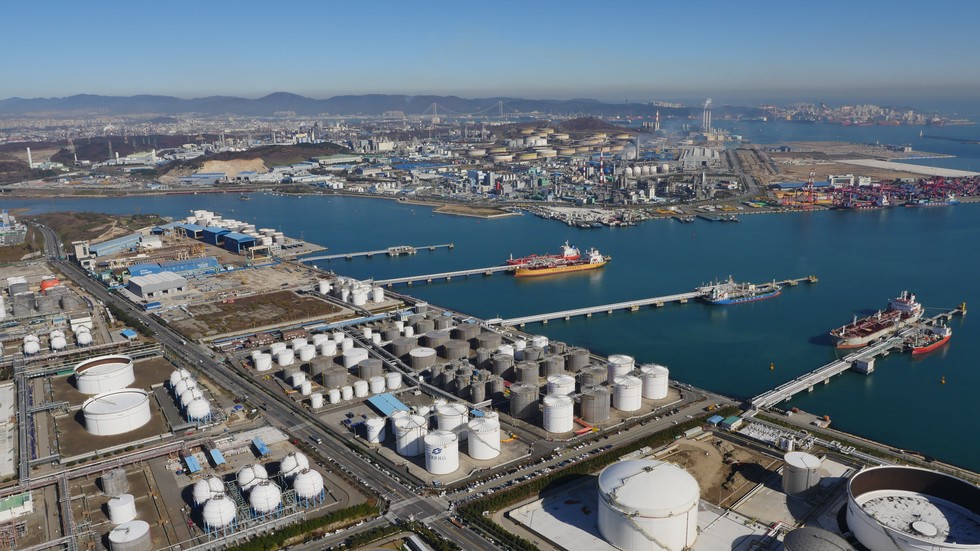
In Korea, Odfjell Terminals Korea (OTK) is undergoing a transformation of its own. In close partnership, local management and Odfjell have developed a long-term value creation roadmap for the terminal.
Through this process, OTK has revitalized its organization, sharpened its commercial focus, and strengthened its operational foundation. This follows Odfjell doubling down on its commitment to the terminal in 2020 by increasing its ownership to 50%—a clear demonstration of confidence in OTK’s long-term role in the region.
That commitment is now reflected in a series of major investments. The E5 project—the largest expansion since the terminal’s opening—adds 87,940 cbm of new capacity across ten tanks for products ranging from BTX to methanol and sustainable fuels.
Developed in partnership with S-OIL, one of Korea’s leading energy companies, the project underscores OTK’s position as a trusted logistics partner and a strategic part of Ulsan’s industrial landscape.
Alongside E5, OTK is upgrading capacity at its main jetty and preparing to bring a second jetty into operation.
These developments significantly enhance OTK’s flexibility and throughput. Together, they position OTK as an even more strategic partner for customers and a key enabler in Ulsan’s transition toward cleaner energy logistics.
The last 12 months
Like all industries connected to global trade, we are affected by ongoing geopolitical uncertainty. Over the past year, several macro factors have reshaped product flows:
- Tariffs and geopolitics have created a “wait-and-see” sentiment in the market, extending decision cycles.
- Deglobalization and nearshoring are accelerating, with more domestic production serving local demand—particularly in the U.S., where chemical output increasingly supports domestic consumption.
- Macroeconomic headwinds in Europe and slower growth in China have curbed chemical trade volumes, although essential industrial chemicals remain resilient.
These dynamics affect terminals worldwide, yet Odfjell Terminals’ diversified footprint in strategic trade hubs has supported consistently high occupancy levels. In the specialty chemicals segment, storage demand remains structurally strong.
Unlike commodity fuels, this market is shaped by long-term supply needs and value-chain integration, resulting in greater stability. Our terminals in the U.S., Korea, and Belgium continue to operate at around 95% utilization, underlining this resilience.
Outlook
Some of today’s changes may prove temporary, while others are likely to form part of a new normal. Three structural trends stand out:
- AI-driven transformation: Artificial intelligence and digitalization are increasing industrial efficiency while driving new demand for specialty chemicals in manufacturing, data centers, and production processes.
- Sustainability and renewable fuels: Expansion of biofuel and sustainable chemical production continues to create new opportunities.
- Regionalization: As production and consumption become more local, supply chains will continue to evolve.
We expect gradual normalization as tariff volatility eases and trade flows adjust. While the near term is uncertain, we are confident in the long-term fundamentals of the specialty chemicals segment—and in the enduring demand for resilient, high-quality storage infrastructure,” Lenning says.
“Across our terminal platform, Odfjell’s disciplined framework continues to guide every decision. We will continue to strengthen partnerships and invest organically in areas where the potential for long-term value creation is clear, while selectively evaluating opportunities beyond our current footprint.”
Growth will remain methodical, anchored in realizing the full potential of existing terminals, while remaining open to ventures that complement and enhance the platform.
That same phased, risk-managed approach underpins every expansion and improvement underway. The ambition isn’t to be the largest operator, but the safest, most reliable, and most value-accretive for customers and shareholders alike.
“Our goal is simple,” Lenning says. “To keep demonstrating that focus and discipline drive performance. We don’t chase scale for its own sake—we focus on doing the right things, the right way. When we do, growth comes as a natural consequence. We will continue to support our customers and responding to their evolving needs, safely and efficiently."